Torc Provides Fast, Secure Self-Service for Virtual Development Using Amazon DCV

Torc Provides Fast, Secure Self-Service for Virtual Development Using Amazon DCV

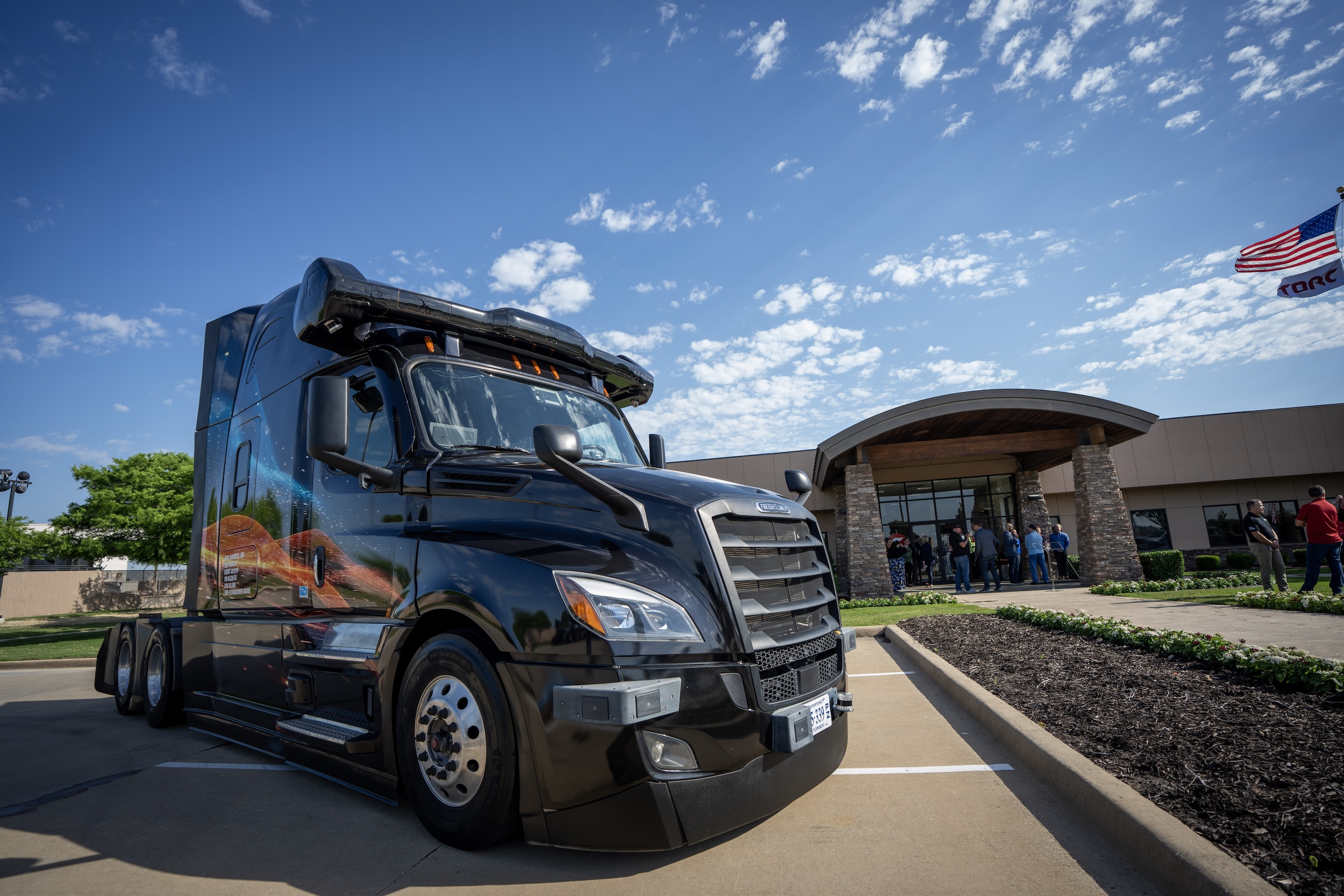
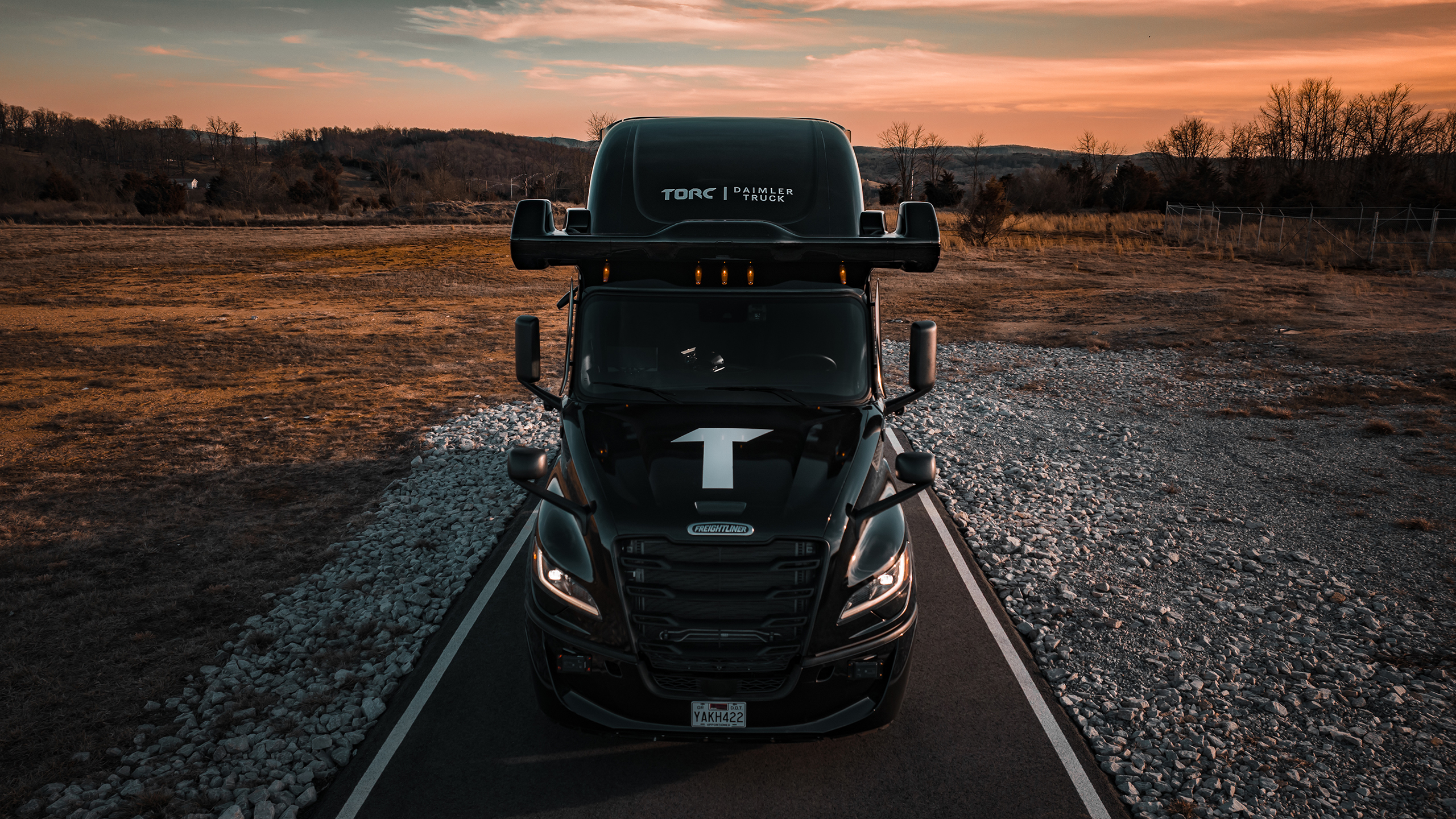
Torc 2025 autonomous truck

This case study was originally posted at the AWS Solutions site.


Overview

Torc Robotics (Torc) wanted to facilitate remote development for its distributed workforce. The company develops autonomous vehicle software and technology that’s aimed at commercializing autonomous semitrucks by 2027. To support these efforts, Torc needed a secure, robust virtual desktop infrastructure (VDI) solution for engineers to run large GPU- and CPU-based workloads.

Torc, which was already using Amazon Web Services (AWS) for many of its workloads, built a VDI solution using Amazon DCV, which delivers high-performance remote desktop and application streaming. Now, Torc engineers have secure, highly available access to the compute resources that they need in minutes, and the company can continue working toward its goal of making highways safer using autonomous driving technology.


Opportunity | Using Amazon DCV to create the VDI Ranch for Torc

Torc—founded in 2005 and an independent subsidiary of Daimler Truck since 2019—is focused on delivering an autonomous trucking software product for hub-to-hub transportation, with the vision to provide fleet customers with the safest, most reliable, and cost-effective solution on the market. “Safety is a top priority at Torc,” says Jason Fox, senior engineering manager at Torc. “The trucking industry is facing driver shortages and inefficiencies, and there are many crashes on public roads that involve trucks. There is an opportunity to improve road safety and efficiency in freight transportation and Torc’s role in this is developing autonomously driving semitrucks.” In 2024, Torc completed validation of its first driver-out product release on production-intent hardware and software. The company is now testing on public roads from its autonomous hub in the Dallas–Fort Worth area.

Torc’s engineers and developers work from many locations, and the company sought to support remote development in a governed, standardized environment where it could secure its intellectual property. Torc also wanted to provide flexible access to GPU resources for the machine learning research and training that supports its autonomous driving software. At the same time, Torc did not want to create a centralized environment that would have high maintenance overhead or single points of failure. “We’re cloud engineers, so we think that things should be horizontally scaled, resilient, automated, and repeatable hundreds of times; not centrally managed or where a single developer’s issues will affect other people,” says Fox.

Torc tested various VDI solutions. As a customer of AWS since 2020, it looked to see what AWS had to offer. “We lean on AWS heavily for managed services whenever we can so that we can think more about writing code and making the trucks work,” says Fox. “The services that AWS offers made sense for this project as well.” Torc worked with the AWS team to test Amazon DCV. The solution worked well for the company, and Torc ultimately used it as the main component of its in-house VDI solution, the VDI Ranch.


Solution | Spinning up GPUs in under 5 minutes using Amazon DCV

The main principle behind the VDI Ranch is the ability to spin up and down instances as needed. “We strongly feel that in cloud computing environments, servers should be cattle, not pets,” says Fox. “We should have easily reproducible servers in the cloud, and when there’s a problem with a server, you delete it and spin up another. You don’t feed and care for it like a pet.” In fact, one of the options in the VDI Ranch is a “Replace Instance” button. If a server has an issue, the developer can simply replace the instance with a new one, keeping their data and settings intact.

The VDI Ranch provides a self-service, end-user compute environment for nearly 300 developers and engineers who can get access to the compute resources they need in under 5 minutes—rather than submitting a ticket and waiting several days to have resources allocated. This greatly accelerates developer productivity.

With the VDI Ranch, Torc can provide developers with flexible access to GPU and other high-powered computing resources using Amazon Elastic Compute Cloud (Amazon EC2), which provides secure and resizable compute capacity for virtually any workload. “Using AWS and Amazon DCV is a much easier way for us to provide GPU horsepower to developers when they need it,” says Fox. “We cannot provide laptops or even desktops with the kind of GPU power that we get from Amazon EC2 instances, and it’s flexible, so we can tear the instance down when we don’t need it anymore.” The VDI Ranch now powers every major area of Torc’s software development.

Torc implemented automated governance and security controls within the VDI Ranch, including integrating the VDI Ranch with Torc’s third-party identity and access management solution. Torc also implemented observability dashboards in Datadog to track networking and compute instance performance. These dashboards are used by the cloud engineers supporting the VDI Ranch, which has helped Torc more easily troubleshoot technical issues among its remote workforce, improving performance and latency.

The VDI Ranch also makes it possible for the Torc cloud engineering team to standardize the hardware that Torc employees use—which improves security and troubleshooting—while still giving engineers a development environment that uses their preferred operating system. For contractors, Torc uses Amazon WorkSpaces, which provides fully managed virtual desktops. “Using Amazon WorkSpaces, we get the benefits of managed VDI, including segmentation between employee and contractor workloads, and don’t have to manage Windows images,” says Fox.


Outcome | Improving remote development using AWS

As the company works toward releasing its autonomous trucks, Torc will continue improving the user experience of the VDI Ranch for its developers. It has recently deployed a system that intelligently shuts down instances that aren’t being used and has built a VDI-specific compute optimizer into FinOps dashboards to help users rightsize their compute resources. These measures will lead to better optimization and lower costs.


“This project would not have been possible without the AWS team engaging with us for the last 2 years,” says Fox. “I can’t think of a better relationship with a vendor who understands our challenges and helps us find solutions.”

“Using AWS and Amazon DCV is a much easier way for us to provide GPU horsepower to developers when they need it.”

Jason Fox

Senior Engineering Manager, Torc

Dave Anderson Joins the Technology Leadership Team as VP of Engineering for Torc’s Enablement Division

Dave Anderson Joins the Technology Leadership Team as VP of Engineering for Torc’s Enablement Division

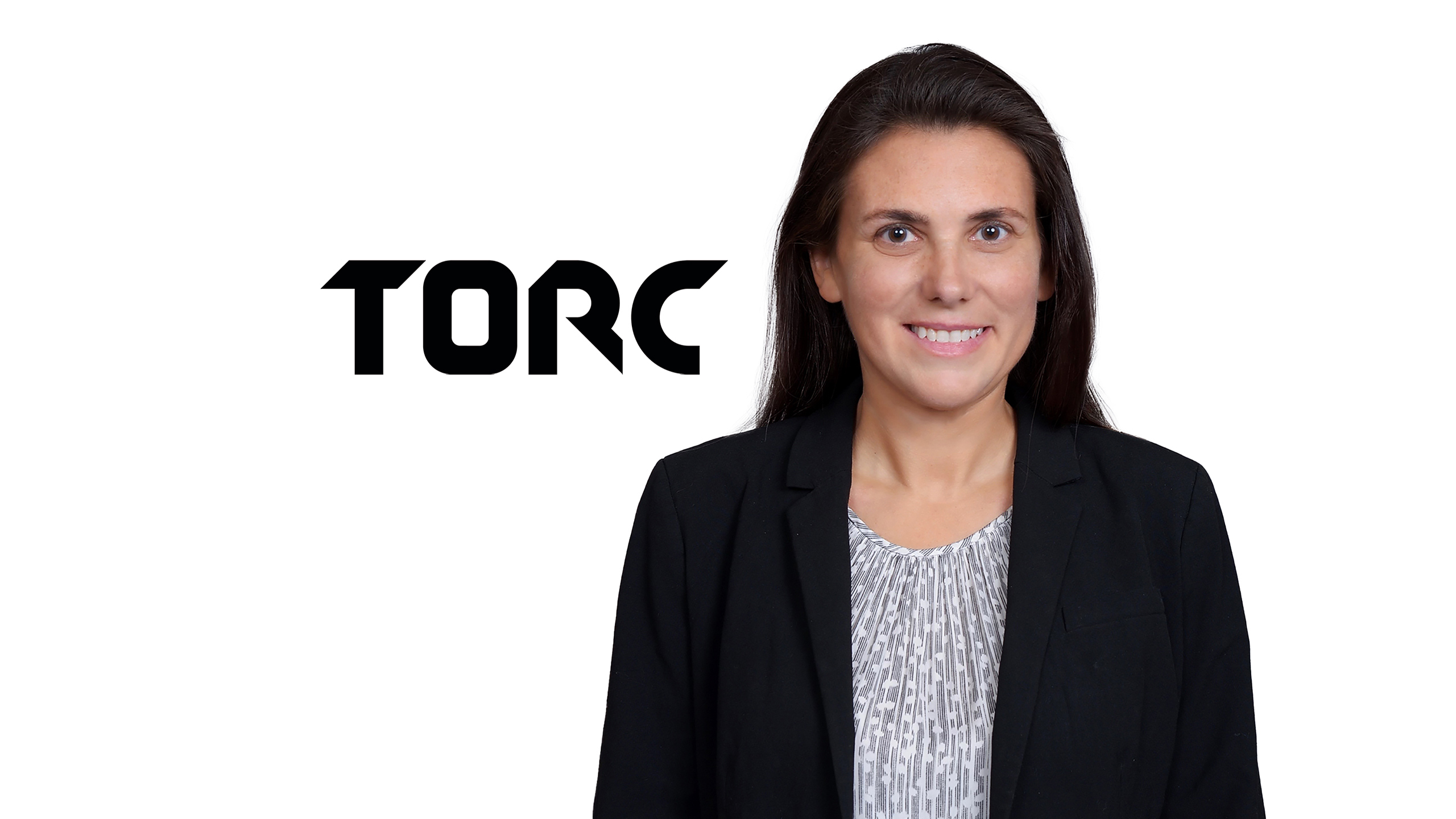
Rebeca Delgado, VP Engineering – Autonomy Applications

BLACKSBURG, Va – September 25, 2025 – Torc Robotics, an independent subsidiary of Daimler Truck AG and a pioneer in commercializing self-driving vehicle technology, today announced the addition of Dave Anderson, who has joined the Technology Leadership Team as the VP of Engineering for our Enablement Division.

Dave Anderson, VP of Enablement, Technology

Dave brings over 25 years of experience in technology leadership and innovation. He served as Vice President and Head of Strategy for Marelli and as Vice President of Innovation at Lear Corporation. Additionally, he was the Sr. Director of Autonomous Driving Platforms at Toyota Research Institute and the Director of Technology for Samsung Strategy & Innovation Center where he was responsible for open innovation, architecture development, and technical innovation in automotive, including the areas of ADAS and Autonomous Driving. Prior to joining Samsung, he led automotive integration for NVIDIA, developing advanced concepts for vehicle cockpit and autonomous vehicles. Dave has also held several engineering and technical roles at Altera, SiriusXM Radio, and Visteon. He was most recently with Codethink, based in Manchester, UK.

He also holds multiple international patents for embedded mobility applications, and in 2015, he was named a Rising Star by Automotive News. He earned his Electrical and Computer Engineering degree from Purdue University, as well as graduating from the Engineering Leadership Program at UC Berkeley.

Based in Ann Arbor, MI, Dave is active in his community and enjoys spending time outdoors with his wife and three kids.


About Torc Robotics

Torc, headquartered in Blacksburg, Virginia, is a global leader and pioneer in trucking. Founded in 2005 at the birth of the self-driving technology, Torc has 20 years of experience in pioneering safety-critical, self-driving applications. Torc is working toward a complete self-driving vehicle software and integration solution and is currently focusing on commercializing autonomous trucks for long-haul applications in the U.S. In addition to its Blacksburg headquarters and engineering offices in Austin, Texas, and Montreal, Canada, Torc has a fleet operations facility in the Dallas-Fort Worth area in Texas, to support the company’s productization and commercialization efforts, as well as a presence in Ann Arbor, MI, to leverage the autonomous and automotive talent base in that region. Torc’s purpose is driving the future of freight with autonomous technology. As the world’s leading autonomous trucking solution, we empower exceptional employees, deliver a focused, hub-to-hub autonomous truck product, and provide our customers with the safest, most reliable, and cost-efficient solution to the market.


Contacts

Laura Lawton, 408-505-5820
press@torc.ai

Ribbon Cut in Ann Arbor as Torc Expands Engineering Footprint

Ribbon Cut in Ann Arbor as Torc Expands Engineering Footprint

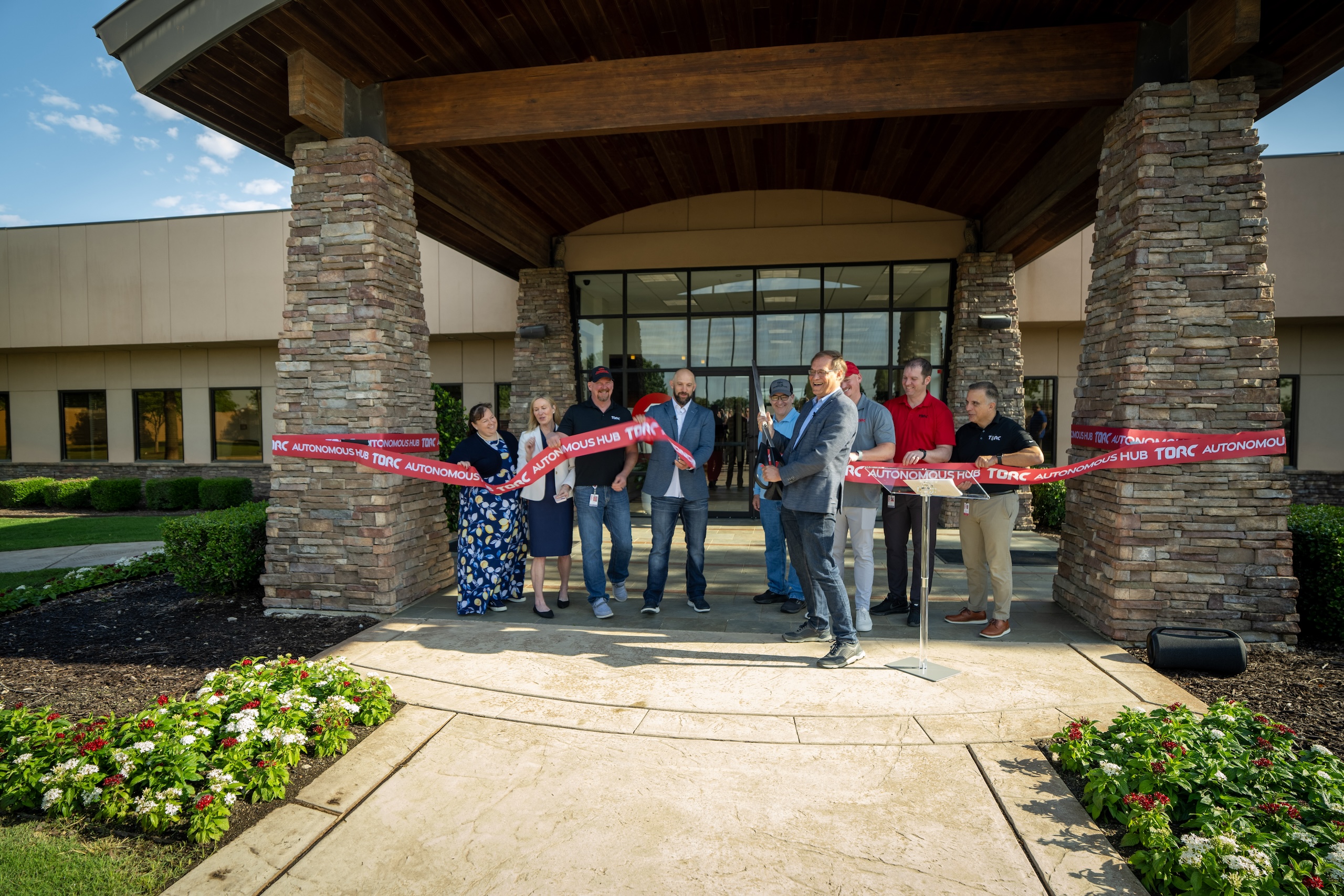
Torc Robotics' CEO cutting the opening ceremony ribbon of Torc's new office in Ann Arbor, MI.

Ribbon Cut in Ann Arbor as Torc Expands Engineering Footprint

Ann Arbor, MI – August 7, 2025 – Under a bright summer sky, Torc celebrated the official grand opening of its newest technology hub in Ann Arbor, Michigan. The milestone event brought together Torc’rs, their families, community leaders, and one of Torc’s striking autonomous trucks as the centerpiece of the celebration. 

The morning began with a ribbon-cutting ceremony greeted by warm smiles and rounds of applause. CEO Peter Vaughan Schmidt and Chief Technology Officer CJ King welcomed the crowd, sharing the significance of the new location in Torc’s journey toward commercializing Level 4 autonomous trucking technology. 

Quentin L. Messer, Jr., CEO of the Michigan Economic Development Corporation (MEDC) and chair of the Michigan Strategic Fund, highlighted the project’s impact:

“The MEDC, and the Michigan Strategic Fund Board, were pleased to support this project, which encompasses each of the three pillars of our ‘Make it in Michigan’ economic development strategy:
People: Hiring, and building up, an engineering talent pipeline here in-state.
Places: Creating an opportunity for people to live, work, and play all in the Ann Arbor region.
Projects: Creating up to 500 new jobs and investing at least $5.59 million in Michigan.
And, you’ve picked an incredible time to ‘Make it in Michigan.’”

Torc Robotics employees smile as they hold the ribbon during the autonomous trucking company's Ann Arbor office opening.

Outside, guests mingled in the warm August sun while kids, parents, and even a few four-legged friends enjoyed the morning. Inside, visitors explored the 32,000-square-foot facility, complete with modern conference rooms and advanced AI-powered labs designed to bring Torc’rs together to tackle some of the most complex engineering challenges. 

CJ King, a Michigan native, reflected on the opening: “Ann Arbor is home to exceptional engineering talent and top-tier research partnerships. It’s exactly the kind of environment where breakthrough ideas thrive, and I’m excited as a local to see what our growing teams here will accomplish.” 

For Torc, the Ann Arbor opening is more than a new address. It’s a strategic investment in innovation and talent. Working closely with the Michigan Economic Development Corporation, Torc secured incentives to support its expansion and hiring plans, reinforcing Michigan’s role as a center for mobility technology. 

As Peter Vaughan Schmidt noted, “While the facility has been operational for several months, this event marks the formal launch of our growing presence in the region. Ann Arbor’s strong engineering ecosystem and proximity to world-class academic institutions make it an ideal location to advance our Level 4 autonomous trucking technology.” 

With the ribbon officially cut and the new office now fully operational, Torc’s Ann Arbor team is ready to help drive the future of freight — right from the heart of one of the country’s most innovative cities. 

For more information, visit www.torc.ai. 


AV 3.0: Torc’s AI Blueprint

AV 3.0: Torc’s AI Blueprint

The autonomous ready Freightliner Cascadia, with Torc virtual driver software embedded within the chassis.
Torc has set our sights on one goal: to create a scalable product capable of delivering the immense value of autonomy to our freight partners. The system, hardware, and software must all be built for safety, adaptability, and cost-efficiency; and work seamlessly on Daimler Truck’s Freightliner Cascadia. And Torc has cracked the code: we’ve designed an unparalleled system that unlocks safe and reliable autonomous driving for long-haul trucking, which can be quickly scaled to meet the needs of our fleet customers. We call it AV 3.0.

AV 3.0

To hit the high goals we set, we recognized that today’s most advanced AI approaches being used to develop autonomy today would not meet the level of capability, performance, and most importantly, safety that the trucking industry requires. We knew we needed to achieve several firsts for autonomous vehicles in parallel: a new autonomous driving architecture as well as a new data and development infrastructure. Torc tapped our world-class AI talent and our long history in robotics and self-driving vehicles to create AV 3.0: our virtual driver software, the advanced data loop, and generative AI simulation infrastructure to train and test it, setting ourselves apart from others in the industry. Let’s break down the parts and explain the advanced components of each.
A graphic describing the three parts of Torc's AV 3.0

The Software Product: Virtual Driver

Virtual driver, our autonomous software product driving the truck, is comprised of three main functional modules: perception, prediction, and planning. It is an end-to-end reinforcement-learned (RL) modular software stack with redundant rule-based (heuristic) guardrails. This allows us to uniquely deliver the optimal mix of autonomous driving performance, system reliability, and driving safety. While the machine learning modules in the stack provide the highest driving performance output, Torc layers in rule-based models and arbitration as redundant guardrails, ensuring the ML model doesn’t violate the basic rules of driving.

The addition of the heuristic guardrails is one of the benefits of Torc’s 20-year heritage in developing autonomous vehicle software products. Building rule-based models is an intensive, manual, and time-consuming process, and Torc has been working with heuristic rules as part of our code since the beginning. Also, the addition of rule-based models is inherently verifiable and interpretable since the rules are hand-coded – another layer of verifiability to support a strong safety case.

The modular architecture of the stack provides fine-grained introspection: the ability to see and validate with transparency and explainability if all the learned and heuristic modules are reacting properly to the input. In comparison, an AV 2.0 end-to-end system is a “black box” with just sensor data in and trajectory out. You can’t understand how the stack is reasoning, only that it is reasoning. There’s no way to check on the intermediary results to check if the module is behaving properly and therefore, no way to effectively debug issues. Every time an issue is found, an AV 2.0 end-to-end system must be retrained as a whole with new data specific to that issue to achieve a correct output, but there is no way of knowing if it truly fixed the issue. This “whack-a-mole” approach adds significant time and uncertainty to the software creation and safety validation process.

With our AV 3.0 stack, we can understand how the system is reasoning within each module, in perception, prediction and planning, and where the problems are, retrain the stack with the right set of generated data to specifically target the issue, and supervise the module-level output to validate the fix.

Perceived object bounding boxes and lane centers from the perception module.

The Simulation Environment: Learning to Create the World

Supporting the training of our virtual driver is our world generation and data-driven simulation environment, comprised of several important and complex pieces.

It Always Starts with the Data. We capture real-world data with the actual production-intent sensor suites on our trucks and have collected a breadth of highway and surface street data across many regions and driving conditions.

In fact, Torc has by far the largest set of real-world driving data in autonomous trucking, spanning many diverse scenarios and corner cases.

We then recreate that real-world data within our data-driven simulation environment, giving us the ability to replay those scenes ad infinitum to test the virtual driver. But that real-world data, used repeatedly on replay, is also the starting point for the generative AI environment we’ve developed, to create infinite sequences of challenging driving scenes and scenarios necessary to train and test the virtual driver to meet the needs of our ODD and safety goals.

As no such capability to generate the realistic data needed was available in the market, the Torc AI team leveraged years of research and development to deliver these capabilities, providing us with a unique time, cost, and data fidelity advantage.

In fact, Torc has by far the largest set of real-world driving data in autonomous trucking, spanning many diverse scenarios and corner cases.

These can be summarized as the following three capabilities: 

Neural Rendering

A generative AI approach for realistic scene creation. Based on real world scenes, we can recreate freight-specific, customer-desired sections of road with various “actors” — cars, trucks, animals, pedestrians —  and then generate unique additions and/or changes to the scene, like a car braking hard in front, a wrong way driver, a light snow shower that becomes a blizzard, in a photo-and-lidar-realistic output that can be injected into our perception stack.


World Simulation

This approach generates the other reactive objects that react to our truck (the ego vehicle) and then manages the behaviors however we want or need. We can make reactions more or less aggressive on all of the actors, creating infinite scenes and behaviors. For example, one car captured behaving normally on one section of road can then be made to behave aggressively by degrees. It can go from benign to aggressively merging into the truck’s lane in various places by millimeters and timings by milliseconds.

Importantly, all learned behaviors are grounded in real-world physics-based models, so while we could test with Hollywood-style simulations of flying cars or people, we stay grounded in actualities. We instead simulate vehicles skidding into our lane where in the real-world data, they had been driving carefully in their own lanes.

scenario generation

Scenario generation takes world simulation to the next level, generating never-before-seen road geometries, creating all road conditions, all edge cases, and repeating the simulations through millions of miles, allowing for an even more diverse set of road scenarios. This allows us to quickly adapt the virtual driver software to any new route with minimal additional data collection and time, dramatically accelerating our ability to scale our software to drive new highways, new autonomous hub layouts, in different states, and so on.

Neural Rendering cropping

Real world footage

“For fully data driven simulation, you need to be able to simulate the behaviors and do so very realistically. You also need to be able to control the reactions, in a data-driven way,” says Felix Heide, Head of AI at Torc, and one of the architects of Scenario Dreamer, a recent diffusion method for scenario generation. “This combination of world simulation systems accomplishes what is necessary.”

The Proof: Training and Testing

Using these layers of world simulation, neural scene rendering together with generated sequences with fully reactive agents, we repeatedly fine-tune and deeply test the virtual driver, as mentioned previously, an instructor teaching a “behind-the-wheel” student, by using reinforcement learning, to explore decision making and provide feedback at the same time.

Virtual driver is taught not only by providing the ideal road trajectory, but also by providing additional scene information so that the system learns to explicitly predict and, on top of that, to explicitly use the information for its final trajectory decision. This, in return, allows a more accurate training process, which, as a byproduct, helps us understand in more detail how the entire system behaves. That detail can then be fed back into the system.

We apply all these techniques to create the data needed to deeply test the virtual driver behavior for the most unusual or unlikely corner cases, to give us high confidence of safe behavior on the road, i.e., that the training of our AI system and the virtual driver has been successful. After that confidence threshold is reached, we move the updated model out of the simulated environment and onto the trucks, validating on both closed course and public roads for every software release.

It’s this high-velocity AV 3.0 framework of data –> training –-> testing –> release that sets an industry benchmark in software development and deployment.

The End Result: Safe and Scalable

End-to-end systems are critical for scalability. It allows us to be much more adaptable to new needs or to fix issues quickly, and because we have a modular transparent stack, we can see the issues independently,” says C.J. King, Torc Chief Technology Officer. “We can use our generative AI stack to generate the data to train the outcomes rather than train a camera-based object and distance detector, or lidar and radar object detection separately from the prediction and planning. It’s another layer of getting the technology ready for the road.”

This high velocity is critical not only to keep to our release schedule, but to ensure we can quickly enable our customers to scale to new routes and hubs. We can identify, triage, and deploy issues to engineering before we ever encounter them on the road. Additionally, issue resolution and fixes are done within days, not weeks. This turnaround means there can be multiple fixes and releases daily.

Why We Call It AV 3.0

Why do we call it AV 3.0? Torc’s innovation is the next step beyond the technology in AV 1.0 and AV 2.0, as we knew those approaches alone weren’t enough to succeed in creating and deploying autonomous trucks in a timely manner. Torc’s AV 3.0 drives the state of the art in the evolution of scalable, practical, and applied autonomous vehicle software. Until we reach our product launch in 2027, we will continue to hone this technology, gather more real-world data (something we will always need), develop commercialization plans and hub designs, close our robust safety case, and solve a multitude of other necessary autonomous trucking puzzles. But AV 3.0 provides a clear path to how it can be done.  So, what’s next? We’ve defined AV 3.0, the groundbreaking technology used to create, train, and test the virtual driver. What our virtual driver runs on, and how, is another industry-defining element setting Torc apart from the competition. We’re deploying this technology right now, not on prototypes or demonstration trucks, but on the trucks we will go to market with… on production-intent embedded hardware.
Next Up: “Applied AV 3.0: The Key of Embedded Hardware ”

Transparency

AV 3.0 understands the state of the entire model and why it acted the way it did, both within individual modules and how it affected the entire end-to-end system. There’s visibility and understanding of what’s always going on inside the model at all times.

Explainability

AV 3.0 permits traceability and verifiability, providing us with the ability to see why and where our virtual driver did something. We can understand both what is detected and what reasoning the system made to determine the object and its meaning. This is crucial for the explainability of our end-to-end system and for our safety case.

Improved Accuracy

Introspection means the AI model is aware of its internal state, how it makes decisions, and its behaviors. Models can understand why they are doing something and can therefore be more accurate.

Let’s explain EXPLAINABILITY and IMPROVED ACCURACY together: AV 3.0 provides object detection outputs and information on the 3D world view our vehicle is in – Is that a car? At what velocity are other highway users travelling at? Is that an emergency vehicle? Where is the lane center? A traffic light? This level of detail allows us to understand what the virtual driver thinks in a certain situation, and we also know how it acts with that information.

Improved Safety

With full transparency of the entire model and individual modules, it is easier to monitor model behavior and verify the software from the inside and explain perception and decision making in full.

Torc Announces New Engineering Center in Ann Arbor, Michigan, to Further Fuel Autonomous Vehicle Innovation
Torc Announces New Engineering Center in Ann Arbor, Michigan, to Further Fuel Autonomous Vehicle Innovation

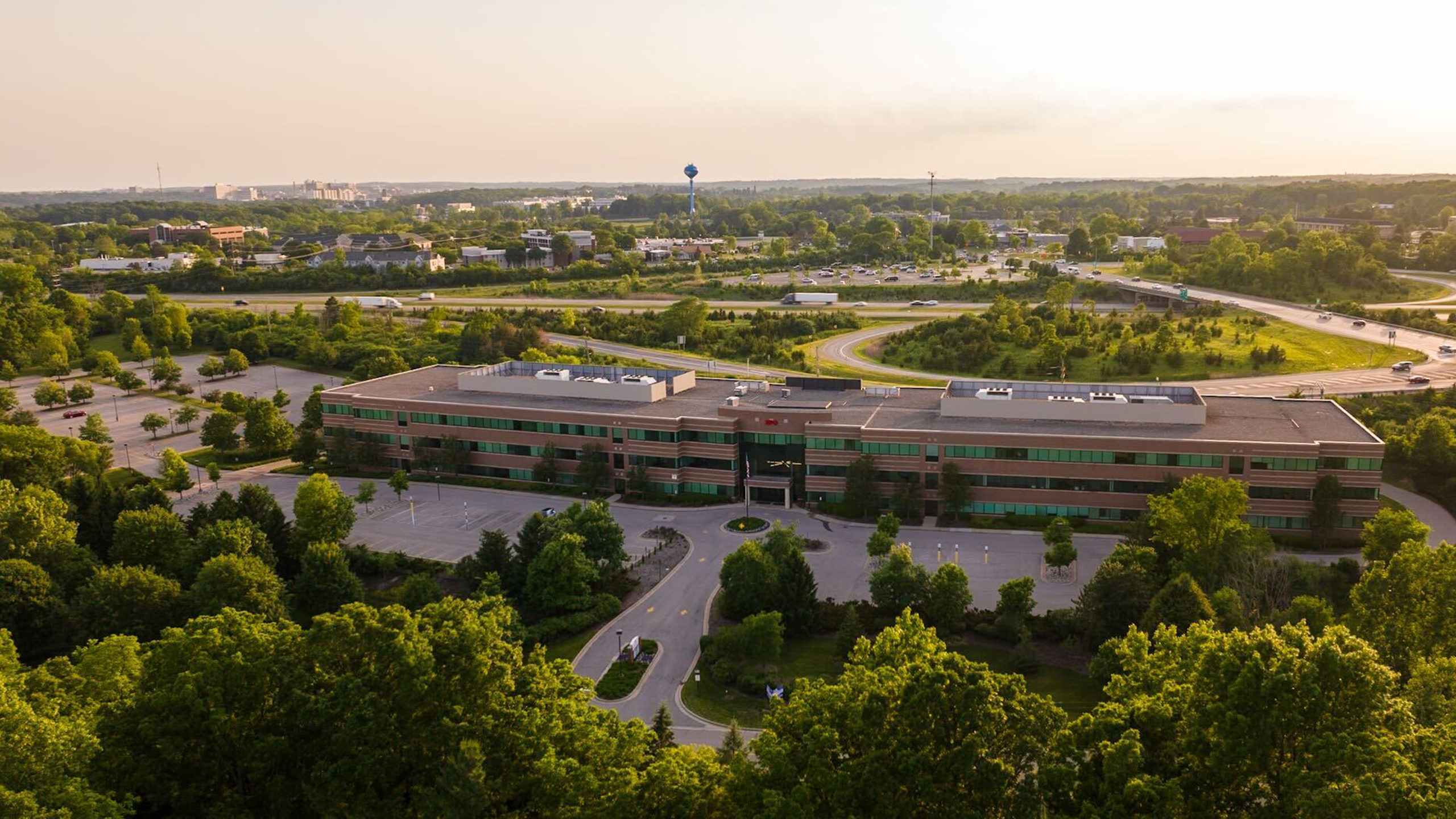
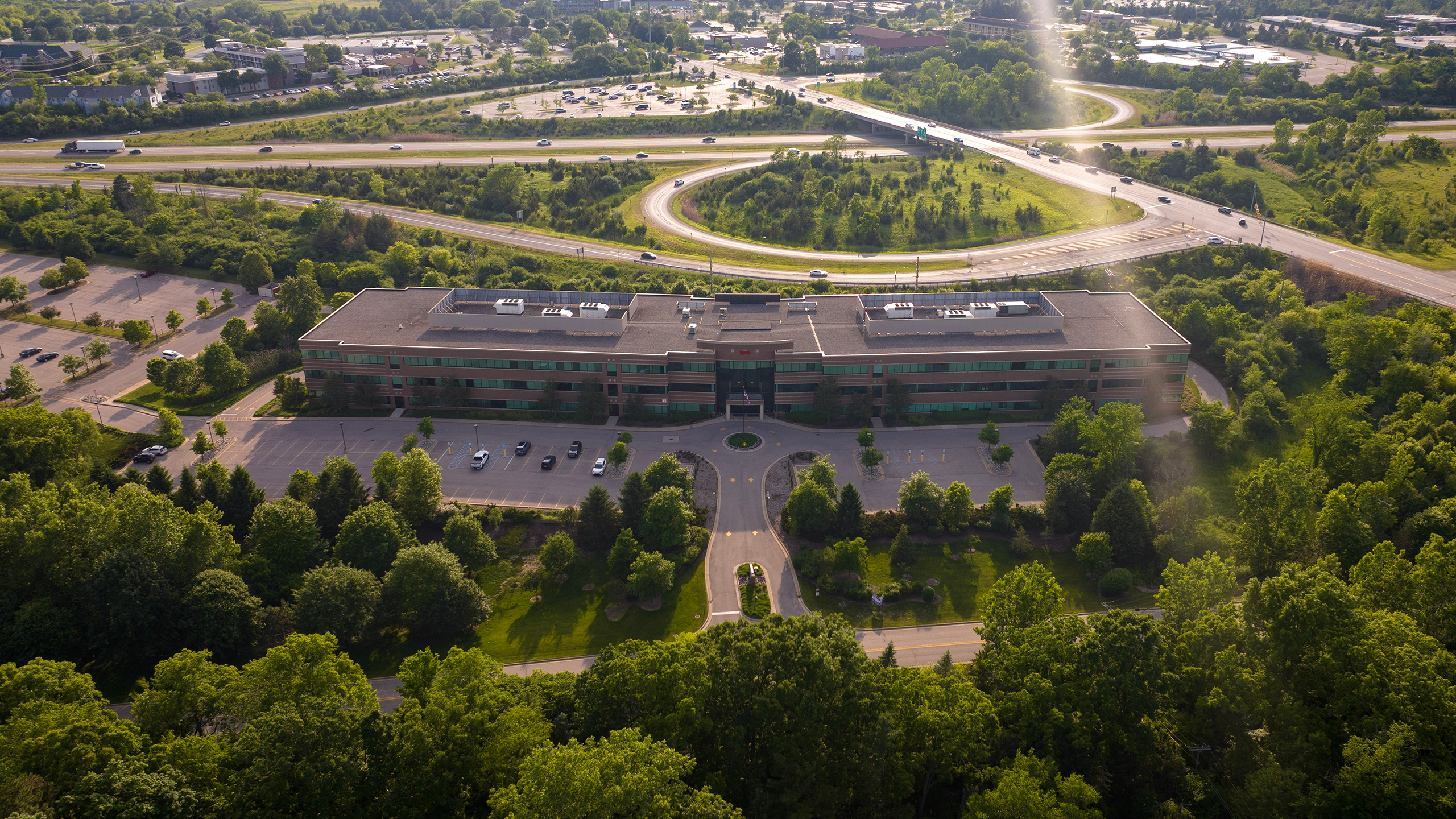
Sunny drone shot of the Torc Ann Arbor office location

Strategic Location Taps into Regional Automotive and Tech Talent, Builds on Recent Dallas Forth-Worth Expansion

Blacksburg, VA – June 24, 2025 – Torc, a pioneer in commercializing self-driving class 8 trucks, today announced the establishment of a new engineering center in Ann Arbor, Michigan. As Torc continues its path toward commercialization in 2027, this strategic expansion will further accelerate the company’s productization efforts and tap into the region’s rich automotive and technology talent pool.

As part of its effort to open the Ann Arbor location, Torc worked closely with the Michigan Economic Development Corporation to secure incentives to support the expansion into Michigan, as Torc plans significant hiring in this region to grow its team and technical talent capabilities.

Torc’s Ann Arbor site will help drive critical product milestones. A diverse range of engineering roles will be based in the office, including expertise in machine learning, software, hardware, and systems engineering, alongside positions in product engineering, safety, and other key functions.

“This strategic location is a natural fit for Torc as we continue to advance our autonomous technology,” said Jamie Swaim, Chief People Officer at Torc. “Ann Arbor’s proximity to the Detroit automotive industry and a wealth of high-tech talent, combined with the exceptional concentration of high-caliber universities and colleges, makes it an ideal environment for our growth and productization strategy. This new center will complement the strong engineering talent we already have across the nation.”

The new office, located in northeast Ann Arbor, will encompass approximately 32,000 square feet and will feature multiple collaboration spaces and hardware in the loop labs.

“We are pleased to support the continued growth and expansion of Torc, whose project is a testament to the strength of our state’s mobility industry and Michiganders’ superior skills,” said Quentin L. Messer, Jr., CEO of the Michigan Economic Development Corporation and chair of the Michigan Strategic Fund. “My congratulations and gratitude to Torc; we are honored to earn this investment. We look forward to celebrating your future success and that of the People, Places, and Projects who will benefit from your presence in the great state of Michigan.”

Torc’s decision to establish a presence in Ann Arbor underscores its commitment to fostering innovation and teamwork through strategic talent acquisition and collaboration within key technology and automotive ecosystems. For more information on Torc, please visit www.torc.ai.

About Torc
Torc, headquartered in Blacksburg, Virginia, is an independent subsidiary of Daimler Truck AG, a global leader and pioneer in trucking. Founded in 2005 at the birth of the self-driving vehicle revolution, Torc has over 20 years of experience in pioneering safety-critical, self-driving applications. Torc offers a complete self-driving vehicle software and integration solution and is currently focusing on commercializing autonomous trucks for long-haul applications in the U.S. In addition to its Blacksburg headquarters and engineering offices in Austin, Texas, and Montreal, Canada, Torc has a fleet operations facility in the Dallas-Fort Worth area in Texas, to support the company’s productization and commercialization efforts, as well as a presence in Ann Arbor, MI, to take advantage of the autonomous and automotive talent base in that region. Torc’s purpose is driving the future of freight with autonomous technology. As the world’s leading autonomous trucking solution, we empower exceptional employees, deliver a focused, hub-to-hub autonomous truck product, and provide our customers with the safest, most reliable, and cost-efficient solution to the market.
Torc Joins the Stanford Center for AI Safety to Conduct Joint Research on AI Safety for Level 4 Autonomous Trucking

Torc Joins the Stanford Center for AI Safety to Conduct Joint Research on AI Safety for Level 4 Autonomous Trucking

The collaboration aims to advance autonomous trucking safety through cutting-edge AI research

Blacksburg, VA – June 17, 2025 – Torc, a pioneer in commercializing self-driving class 8 trucks, today announced its membership with the Stanford Center for AI Safety, which conducts state-of-the-art research to help ensure the safety of AI, specifically machine learning, for use in autonomous trucking applications. This membership marks a significant milestone in Torc’s ongoing commitment to ensuring the safety and reliability of its autonomous trucking solutions as the company prepares for market entry in 2027.

The membership enables Torc to sponsor, collaborate in, and coauthor research with the Stanford Center for AI Safety, enabling direct access to those research findings as they happen. Access to the center’s research symposiums, seminars, and other member benefits also help Torc apply Stanford’s extensive AI Safety research in the company’s efforts to significantly enhance the safety protocols of machine learning models within its autonomous driving systems.

“Torc is proud to join the Stanford Center for AI Safety, reinforcing our mission to deliver safe, scalable, and trustworthy autonomous solutions,” said Steve Kenner, Chief Safety Officer at Torc. “This membership aligns with our commitment to advancing rigorous safety practices in AI development and supports our goal of providing highly reliable technology to our customers.”

The Stanford Center for AI Safety’s research focuses on developing robust safety protocols and advanced machine learning techniques to mitigate risks in autonomous systems. As a member of the center, Torc can leverage published research to continue to address critical safety challenges in autonomous driving applications. Ultimately, Torc will work to continue to enhance the reliability and safety of its machine learning models toward the company’s goal of fully commercializing autonomous trucks for long-haul applications in the U.S. in 2027.

“Collaborating with members in our affiliates program allows us to apply our research in AI safety to real-world challenges,” commented Duncan Eddy, Director of the Stanford Center for AI Safety. “Our work with Torc will include efforts to enhance the safety and reliability of autonomous driving systems, ultimately contributing to the advancement of this transformative technology.”

About Torc

Torc, headquartered in Blacksburg, Virginia, is an independent subsidiary of Daimler Truck AG, a global leader and pioneer in trucking. Founded in 2005 at the birth of the self-driving vehicle revolution, Torc has over 20 years of experience in pioneering safety-critical, self-driving applications. Torc offers a complete self-driving vehicle software and integration solution and is currently focusing on commercializing autonomous trucks for long-haul applications in the U.S. In addition to its Blacksburg headquarters and engineering offices in Austin, Texas, and Montreal, Canada, Torc has a fleet operations facility in the Dallas-Fort Worth area in Texas, to support the company’s productization and commercialization efforts, as well as a presence in Ann Arbor, MI, to take advantage of the autonomous and automotive talent base in that region. Torc’s purpose is driving the future of freight with autonomous technology. As the world’s leading autonomous trucking solution, we empower exceptional employees, deliver a focused, hub-to-hub autonomous truck product, and provide our customers with the safest, most reliable, and cost-efficient solution to the market.